

Add Row
Add Element
My Wellness Train Network
update
My Wellness Train Network
cropper
update
Add Element
  • Menu 1
  • Menu 2
  • Menu 3
  • Menu 4
  • Menu 5
  • Menu 6
Add Element
  • update
  • update
  • update
  • update
  • update
  • update
  • update
May 01.2025
2 Minutes Read

Discover Effective Tips to Prevent Peeling Nails and Maintain They Health

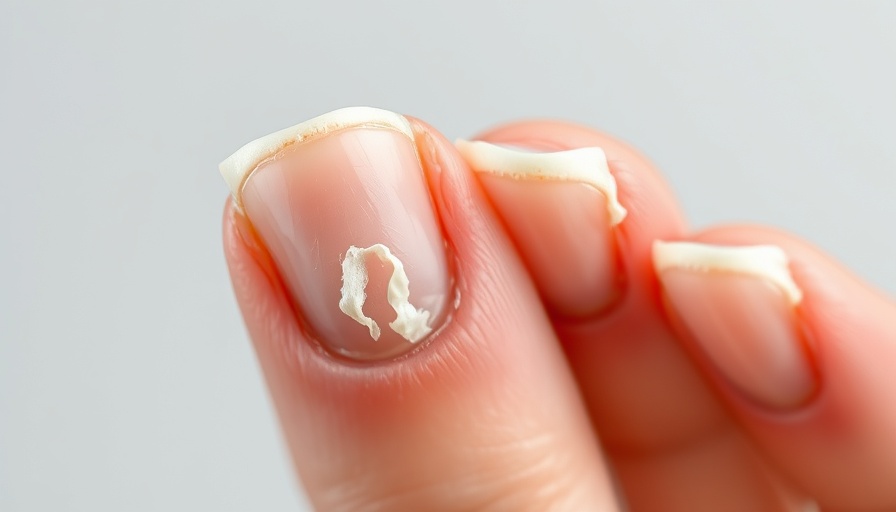
Close-up of peeling nails showing texture and detail.

Why Are Your Nails Peeling? Understanding the Causes

Peeling nails can often serve as a signal of broader health issues or habits that need adjustment. Daily activities, environmental factors, and even dietary choices can contribute to this problem. Dermatologists recommend being vigilant about nail health, as peeling nails might hint at hydration levels, exposure to harsh chemicals, or even deficiencies in essential nutrients.

Common Causes of Peeling Nails

Dermatologist Dr. Blair Murphy-Rose points out that frequent exposure to moisture is a primary offender. As many individuals engage in household chores or professions that require hands to be in water often, the risk of softening and damaging the nails increases. To combat this, wearing gloves during chores can protect your nails. Additionally, over-buffing nails can lead to brittleness, initiating a cycle of damage. Dr. Shirin Peters suggests using nourishing creams or oils post-buffing to maintain moisture and avoid further damage.

Hidden Culprits: Chemicals in Your Products

The chemicals in nail care products and daily hygiene items can also wreak havoc on your nails. Products containing harsh detergents or adhesives can strip away moisture and weaken the nail structure. Instead, seek out hypoallergenic options when possible. Brands like Aveeno and Cetaphil are known for their gentler formulations that can help maintain nail integrity while preventing peeling.

Nutritional Factors That Affect Nail Health

A well-balanced diet is crucial for overall health, including nail strength. Deficiencies in key vitamins and nutrients such as biotin, folate, and protein can lead to poor nail growth and structure. Incorporating a variety of foods, including leafy greens, nuts, and lean meats, may improve nail health significantly. Consider discussing with a healthcare provider or nutritionist for tailored advice.

Implementing Preventive Care for Healthy Nails

Preventive care plays an essential role in maintaining not just nail health, but overall wellness. Engaging in self-care practices such as regular moisturizing, avoiding overly harsh products, and educating yourself on the ingredients in your cosmetics can significantly enhance your nail care routine. If persistent issues arise with your nails, consulting a healthcare professional for screenings or possible treatments may be advisable.

Maintaining beautiful and healthy nails isn’t merely about aesthetics. It reflects your commitment to skin and overall health. By adopting some key practices, you can prevent peeling nails and enjoy flourishing nails as an important aspect of your health journey.

Integrative Health

34 Views

0 Comments

Write A Comment

*
*
Related Posts All Posts
12.12.2025

Discover How Metabolic Health in Your 20s Affects Brain Function

Update The Startling Link Between Metabolism and Brain Health Research from Arizona State University presents a groundbreaking perspective on cognitive decline: it may start much earlier than previously thought. This new revelation emphasizes the critical relationship between metabolic health and our brain function, especially in young adults. A study comparing blood samples from individuals in their 20s and 30s demonstrated concerning connections between obesity, inflammation, and neurodegenerative biomarkers. Why Choline is Essential for Brain Health Choline is a nutrient often overlooked in discussions about brain health. Not only is it crucial for maintaining liver function and cell membrane integrity, but it also plays a significant role in neurotransmitter synthesis—specifically acetylcholine, known for its influence on memory and learning. Alarmingly, many young adults, particularly women, are not getting sufficient choline. This deficiency correlates with higher inflammation levels and insulin resistance, pointing to the necessity of monitoring nutrient intake in the context of brain health. Actionable Insights for Young Adults Given this new understanding of young adulthood as a critical period for brain health, adults should consider their metabolic health as part of their total wellbeing. Here are a couple of actionable insights: Emphasize Nutrient-Rich Foods: Include foods high in choline such as eggs, fish, and various vegetables to support metabolic and brain health. Monitor Inflammation: Engage in practices that reduce inflammation, such as adopting an anti-inflammatory diet and integrating mindfulness practices into your daily routine. Enhancing Long-Term Health and Wellbeing Understanding that brain health begins long before cognitive decline offers a more proactive approach to personal growth. By embracing holistic wellness—from nutrition to mental clarity—young adults can pave the way for healthier aging. This connects deeply to the importance of self-care rituals and integrating functional fitness into one’s lifestyle. Conclusion: A Call to Action It’s never too early to prioritize your health. Incorporating healthier habits today can create a foundation for longevity and overall wellness. Whether it’s through diet, mindfulness practices, or embracing holistic nutrition, the choices made in your 20s and 30s can profoundly impact your future. The best time to start embracing a healthy lifestyle with proper nutrition and wellness practices is now, for both mind and body.

12.08.2025

Unlock the Power of Creatine: Fueling the Muscle-Brain Connection for Holistic Wellness

Update Understanding the Muscle-Brain Connection For years, creatine has been hailed in the fitness community primarily for its role in enhancing muscle strength and recovery. However, exciting new research is illuminating the nuanced relationship between the muscles and the brain, specifically how creatine supplementation may support cognitive health alongside physical fitness. This emerging paradigm is often described as the 'muscle-brain axis,' showcasing how our physical health impacts our mental capabilities. Creatine's Role in Physical and Mental Wellness The muscle-brain axis refers to the interplay between muscular activity and brain function, with muscles communicating with the brain through myokines—small proteins secreted during muscle contractions. These myokines, including brain-derived neurotrophic factor (BDNF), act as crucial regulators of brain health, influencing areas such as memory and mood. Recent research has suggested that creatine may enhance the release and effectiveness of these valuable myokines, further bridging the gap between muscle health and cognitive performance. The Science Behind Creatine and Myokines Studies reveal the potential of creatine to aid in energy production not just in muscles but also in neurons. When creatine is supplemented, it enhances ATP regeneration—a key energy currency in cells. Improved energy status may increase the production of myokines during exercise, ensuring that beneficial neuroprotective signals reach the brain. Notably, substances like IL-6 and IGF-1, released from skeletal muscles, can cross the blood-brain barrier, supporting neuron survival and neurogenesis. Benefits of Supplementing Creatine for Total Wellbeing Taking creatine regularly, typically five grams a day, may unlock various health benefits. It can boost physical performance, particularly in endurance and high-intensity activities, while simultaneously enhancing cognitive functions such as memory and focus. This dual-action makes creatine an attractive addition to the health and wellness regimens of those looking for comprehensive lifestyle solutions. Not to mention, the anti-inflammatory properties associated with creatine can contribute to overall well-being, reducing stress on both muscular and cognitive fronts. Future Directions: A Holistic Approach to Health As researchers dive deeper into the muscle-brain connection, creatine's potential extends beyond fitness enthusiasts to encompass broader health implications. Its ability to favorably influence neuroplasticity through exercise-induced myokines hints at exciting possibilities for aging populations and those facing neurodegenerative conditions. In a world where holistic wellness is increasingly prioritized, understanding how physical practices affect mental clarity, emotional resilience, and overall longevity becomes paramount. How You Can Benefit from Creatine Supplementation If you aim to enhance both muscle and cognitive health, integrating creatine into your daily routine may be an excellent strategy. This supplement not only supports physical performance but may also bolster your cognitive abilities, leading to improved overall quality of life. As you embark on your wellness journey, consider the profound relationship between your body and mind and how one influences the other.

12.03.2025

Discover How Zeaxanthin Can Supercharge Your Immune System Today

Update Unlocking the Secret of Zeaxanthin: Your Nutritional Ally Against Cancer For many of us, incorporating healthy foods into our daily routine is a natural endeavor. Perhaps you’ve enjoyed a vibrant salad filled with spinach, kale, or even carrots, all of which contain a powerful nutrient known as zeaxanthin. While it has always been heralded for its benefits to eye health, recent studies shed light on a compelling new role for this carotenoid: supercharging our immune systems, particularly in the fight against cancer. The Untapped Potential of Zeaxanthin Zeaxanthin is far more than just a pigment that protects our eyesight from oxidative stress and harmful blue light; research indicates it also enhances the effectiveness of T cells, the body’s warriors in combating abnormal and cancerous cells. In trials where mice were supplemented with zeaxanthin, researchers witnessed slowed tumor growth and increased immune activity. This is particularly exciting in the context of cutting-edge cancer therapies like immunotherapy. How Does It Work? During investigations, zeaxanthin was found to amplify a crucial component known as the T-cell receptor complex. This complex is essential for T cells to recognize and attack tumor cells effectively. Imagine your immune response as an army; zeaxanthin is like the general giving commands that improve communication and coordination among the troops (CD8+ T cells). Enhanced signaling from zeaxanthin means these immune soldiers can better identify and destroy cancer cells. Food Sources and Supplementation Incorporating more zeaxanthin into your diet can be both delicious and achievable. It is found in various foods, including: Carrots Kale Spinach Orange bell peppers Corn Egg yolks While supplements are available, it’s easy to achieve adequate amounts through a balanced diet rich in these colorful plant-based foods. What It Means for Your Health While comprehensive human studies are on the horizon, the promise of zeaxanthin as a nutritional strategy for enhancing immune resilience suggests that even the simplest dietary choices can have profound effects on our health. Not only should we view zeaxanthin as an ocular protector, but also as a potential ally in promoting longevity and bolstering our defenses against cancer. Final Thoughts As science increasingly validates the connections between diet and immunity, the age-old advice of "you are what you eat" becomes more relevant than ever. Adding zeaxanthin-rich foods to your plate may not only support eye health but enhance your immune system, making this humble carotenoid a multi-functional superstar in our quest for holistic wellness. If you want to enhance your wellness lifestyle, consider embracing this nutrient-rich food trend invigorated by scientific discovery. Prioritizing a healthy diet might be a powerful way to nurture your immune system from the inside out!

Terms of Service

Privacy Policy

Core Modal Title

Sorry, no results found

You Might Find These Articles Interesting

T
Please Check Your Email
We Will Be Following Up Shortly
*
*
*